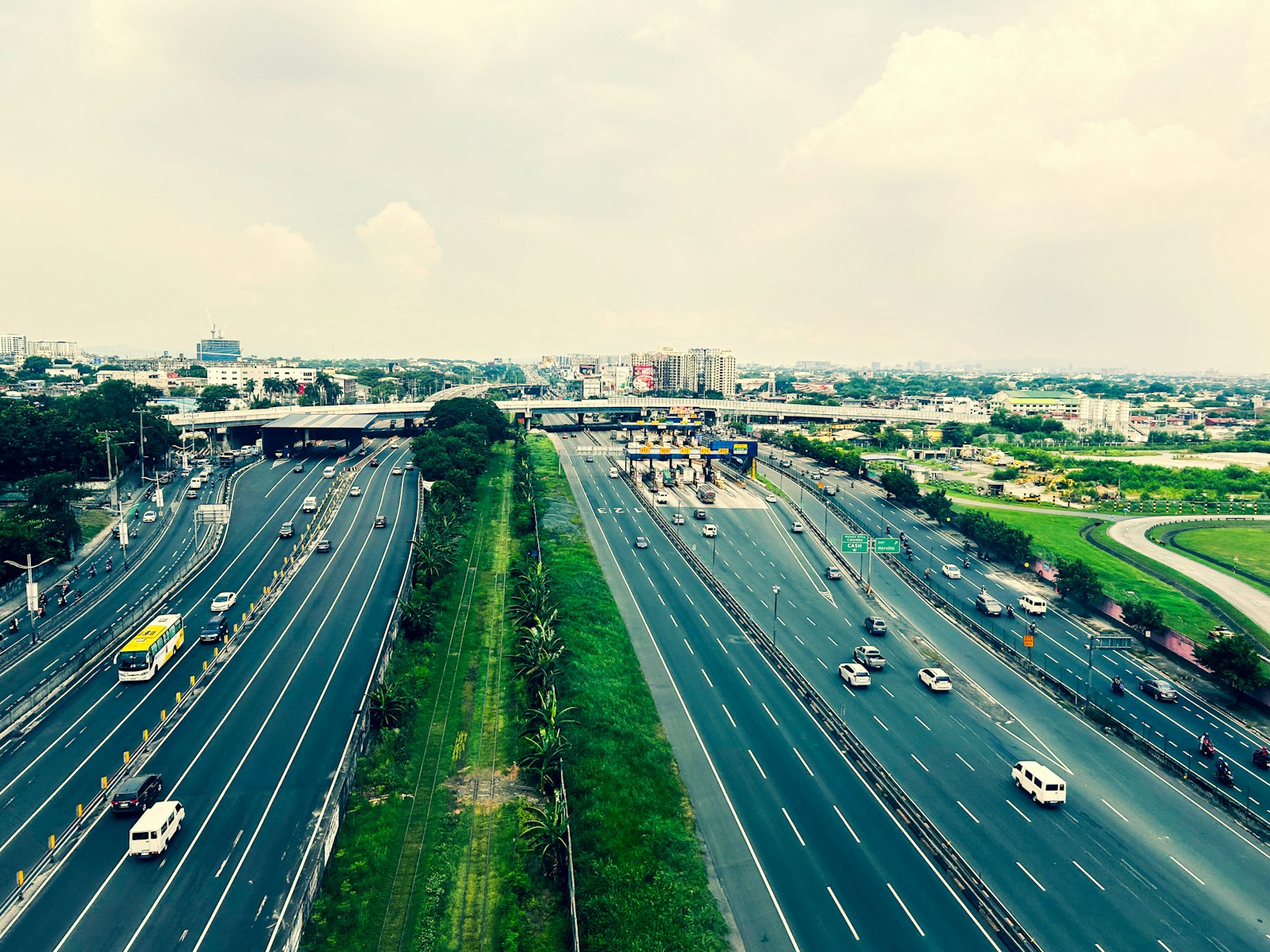
PCI tells you what is visibly wrong with a pavement. IRI tells you how it rides. They measure different things. Using PCI alone misses sub-base failures; using IRI alone misses surface distress. Modern road programs report both per segment, and use the combination to choose the right treatment.
Mixing up PCI and IRI is one of the most common mistakes in municipal pavement management. Agencies buy one score, plan against it, and then wonder why their ride-quality complaints keep growing even though the headline condition number is steady. Or the reverse: they track IRI religiously, hit their target, and still end up with a network covered in alligator cracking.
This piece is a short, practical explainer of the difference, when each is appropriate, and why mature road programs use both.
PCI: Pavement Condition Index (ASTM D6433)
PCI is a visual-distress index. A surveyor, historically human and now increasingly AI, records the pavement distress types defined by ASTM D6433 for each road segment. Each distress type has a severity (low / medium / high) and an extent (share of segment area affected). A severity-weighted deduct model turns all of that into a single 0 to 100 score, banded in seven grades:
- 86–100 = Good. As-new to lightly worn; preventive treatments only.
- 71–85 = Satisfactory. Minor crack-sealing, microsurfacing.
- 56–70 = Fair. Patching, thin overlay.
- 41–55 = Poor. Mill and overlay.
- 26–40 = Very Poor. Structural overlay or reconstruction.
- 11–25 = Serious. Reconstruction, urgent.
- 0–10 = Failed.
PCI is the standard in most North American and Australian municipal pavement-management systems. The strength of PCI is that it is explanatory: when a segment scores poorly, the score itself tells you which distress types are driving it and at what severity. That makes PCI directly actionable for treatment selection.
IRI: International Roughness Index
IRI is a profile-derived ride-quality index: the cumulative vertical movement a standardised reference vehicle would experience per kilometre of the pavement's longitudinal profile. Units are m/km (or in/mi in the US). The World Bank / ARRB bands:
- Under 1.5 m/km = Excellent ride (new expressway).
- 1.5–2.7 = Good (well-maintained arterial).
- 2.7–4.2 = Fair (typical secondary road).
- 4.2–6.0 = Poor (noticeably rough).
- Over 6.0 = Very Poor.
IRI is the World Bank and international-lender standard. It is the condition index most donor-funded road programs are required to report against. The strength of IRI is that it is directly felt: it correlates tightly with what road users experience and with vehicle-operating costs (tire wear, fuel consumption, suspension repairs).
Why they diverge
PCI and IRI don't measure the same thing, and they can diverge dramatically:
High PCI, bad IRI
A segment with a well-surfaced thin overlay over a settled sub-base scores PCI 80 (no visible distress) but IRI 5 m/km (bumpy ride). The distress is underneath, not on top. Visual inspection misses it entirely.
Low PCI, acceptable IRI
A segment with shallow alligator cracking across 40% of the surface scores PCI 40 (visibly distressed) but IRI 2.5 (acceptable ride). The cracking hasn't yet broken up the surface enough to affect profile. Acting on PCI alone would trigger a mill-and-overlay that isn't economically justified yet.
The composite picture
Looking at the PCI–IRI scatter across a network immediately reveals which quadrant each segment is in, and that drives treatment:
- High PCI + Low IRI = healthy. Preventive treatment only.
- Low PCI + Low IRI = surface distress only. Surface treatment (microsurfacing, thin overlay).
- High PCI + High IRI = sub-base failure. Structural investigation, then overlay or reconstruction.
- Low PCI + High IRI = advanced deterioration. Mill and overlay, or reconstruction.
How RoadScout produces both
RoadScout's capture collects the raw signals for both indices simultaneously:
- PCI comes from the computer-vision pipeline running on frames captured by the smartphone camera. The detection models classify and rate distress severity and extent, and the severity-weighted deduct model computes PCI to ASTM D6433 per 100 m segment.
- IRI comes from the telemetry pipeline. The 25 Hz vertical-acceleration trace is converted to a roughness estimate, banded to World Bank / ARRB thresholds and reported in m/km per 100 m segment. It is an estimate from motion telemetry, not a quarter-car profilometer measurement, and it is labelled as such.
Both scores appear in the dashboard alongside each other, with the underlying evidence (annotated frames for PCI, telemetry traces for IRI) available on drill-down. Engineers get the composite view without running two separate survey programs.
The common mistake
The common mistake is to procure one score and call it a condition-assessment program. An imagery-only program produces PCI but no IRI. A profilometer-only program produces IRI but no PCI. Both are incomplete. With either one missing, the treatment-selection logic loses one of its two axes.
If your pavement-management system only has one of the two, it is worth asking whether the second is available from the same capture data. On modern platforms, it usually is.