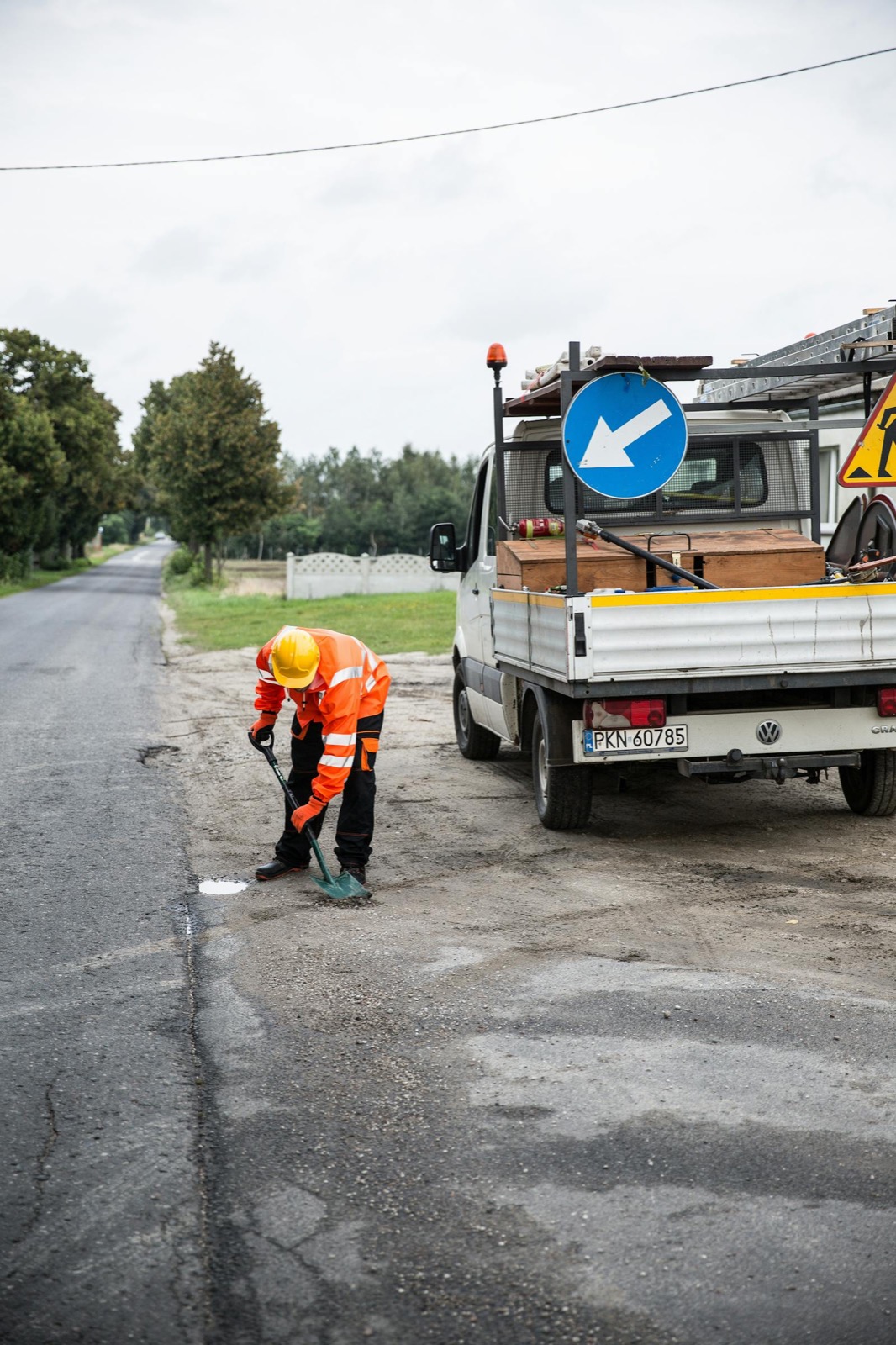
As politicians swim in potholes and agencies declare insolvency, South Africa's road crisis has become political theatre. The underlying problem is different: every municipality in the country is fighting potholes blind. AI-driven, smartphone-based road surveying is the piece of infrastructure that would turn the crisis from a recurring scandal into a managed one.
When Helen Zille strapped on a snorkel mask and lowered herself into a water-filled pothole the size of a swimming pool in Douglasdale, Johannesburg, the video did exactly what it was meant to do: it went viral. Within hours, the City of Johannesburg dispatched a repair crew to a crater that residents say had been ignored for three years.
The stunt crystallised what millions of South African motorists already know. The country's road infrastructure is in freefall. The Automobile Association estimates more than 25 million potholes scar the national road network. The maintenance backlog has ballooned past R200 billion. And in Johannesburg alone, the Roads Agency, which fields nearly 4,000 pothole complaints every month, declared itself insolvent in December 2025 after a R300 million budget cut left it unable to meet even basic operational obligations.
Behind the political theatre of pothole-swimming candidates and ribbon-cutting ceremonies for single road repairs, a quieter question is emerging: what if the problem isn't just a lack of money or political will, but a fundamental lack of information?
The data gap
Every municipality in South Africa is fighting potholes blind. They rely on resident complaints, periodic visual inspections by engineers who can cover maybe 10 kilometres a day, and spreadsheets. Meanwhile, the road network is deteriorating faster than anyone can document it.
The numbers bear this out. Between July and December 2025, the JRA logged 23,572 verified pothole reports, a figure the agency itself acknowledges likely captures only a fraction of the actual defects. Traditional road-condition surveys, which use specialised vehicles and equipment, cost between R1,400 and R5,200 per kilometre. For a cash-strapped municipality, comprehensive network assessment is simply unaffordable.
RoadScout's approach is radically different. The platform uses computer vision, the same branch of AI that enables self-driving cars to interpret their surroundings, combined with smartphone sensor data to automatically detect and classify road defects. A phone mounted on the windshield of any vehicle captures imagery and accelerometer readings. Five production vision models, trained on more than 74,000 annotated images, process that data and deliver a complete road-condition assessment.
The system detects more than 65 classes of defects and assets: potholes classified by severity, the full family of cracking patterns, ravelling, subsidence, and road furniture like traffic signs, guardrails and manholes. Each detection comes with GPS coordinates, severity ratings, evidence photographs and confidence scores. The platform scores road segments using internationally recognised standards: the Pavement Condition Index (PCI) per ASTM D6433 and the International Roughness Index (IRI) banded to World Bank thresholds.
234 times faster
The efficiency gains are stark. A single vehicle equipped with RoadScout can survey over 100 kilometres of road per day while maintaining its normal duties: refuse collection, utility maintenance, traffic patrol. A traditional three-person manual inspection team covers 5 to 10 kilometres in the same period.
We're not asking municipalities to buy anything new. Their fleet vehicles are already driving the road network every day. We're just turning those routine trips into intelligence.
The cost difference is equally dramatic. RoadScout operates at R140 to R700 per kilometre per year, compared to R1,400 to R5,200 for traditional surveys: a reduction of 73% to 95%. For Johannesburg, which allocated just R149 million to road resurfacing against an R81.5 billion decade-long repair estimate, this kind of efficiency isn't a luxury. It's a necessity.
Beyond detection
What distinguishes the platform from a simple pothole-spotting app is its end-to-end approach. Detections feed into an interactive dashboard where engineers can filter by defect type, severity and location. A built-in work-order management system allows maintenance tickets to be created directly from the map, assigned to repair crews and tracked through completion.
The planning layer goes further, offering budget forecasting and network deterioration modelling. It answers questions that municipal engineers have historically been unable to address with data: which roads should be repaired first? Where will next year's failures occur? How should a limited budget be allocated to maximise the lifespan of the network?
This is where the political conversation needs to go. A 72-hour pothole repair pledge is admirable, and Cape Town proves it's achievable, with 80% of potholes fixed within that window. But the real transformation happens when you move from reactive repairs to predictive maintenance. You fix the road before the pothole forms. That requires continuous, objective data at scale.
The human cost
The urgency extends beyond convenience and vehicle damage. In 2024, 10,154 people died on South African roads, a figure the Transport Minister described as a national crisis. The AA has stated that proper road maintenance alone would reduce road fatalities by an estimated 5%, saving roughly 500 lives annually.
Santam, South Africa's largest insurer, reported that pothole-related claims surged by 40% in recent years, with the average claim costing between R20,000 and R25,000. For the millions of South Africans who cannot afford comprehensive vehicle insurance, a single pothole strike can be financially devastating.
When we talk about potholes, we're not talking about an inconvenience. We're talking about a public-safety crisis that disproportionately affects the most vulnerable road users: minibus taxi commuters, cyclists, pedestrians forced onto damaged roads. AI won't fix every problem, but it can ensure that limited resources go where they'll save the most lives.
Cape Town vs Johannesburg: a tale of two cities
The contrast between Cape Town and Johannesburg has become a central narrative in the 2026 election cycle. Cape Town deploys 47 repair teams from 20 depots and achieves its 72-hour repair benchmark in 80% of cases. Residents report approximately 1,400 potholes per month, less than half of Johannesburg's 3,900.
Johannesburg, by contrast, is grappling with an insolvency-declared roads agency, a R300 million budget hole, and infrastructure decay so severe that between October and December 2025, the city recorded 4,336 burst water pipes per month, each one capable of creating the kind of road crater that swallowed Zille's camera crew in Douglasdale.
RoadScout is positioned as the technology layer that could help bridge this gap: built for South African municipal procurement, reporting on the TMH visual condition scale local authorities use, and scaled from small rural networks under 100 km to metropolitan areas managing over 10,000 km of road.